Modern homes are evolving. Today, the line between indoor and outdoor living spaces is increasingly blurred. Homeowners want spaces that flow effortlessly from a cozy interior to a functional and beautiful exterior. Whether it’s a summer dinner on the deck, an evening by the pool, or simply enjoying natural light while cooking, seamless integration between the inside and outside enhances both comfort and lifestyle.
Yet, achieving this kind of harmony can be challenging. Many homeowners struggle with mismatched materials, awkward transitions, and logistical hurdles that make indoor-outdoor remodeling feel disjointed. Without careful planning, even high-end upgrades can end up feeling separate rather than connected.
It is important to consider both the day-to-day and long-term experience. Will the space accommodate seasonal changes? Does it allow for entertaining friends and family without awkward bottlenecks? A well-thought-out design considers traffic flow, sightlines, and practical usage patterns. Additionally, creating a seamless transition can increase a home’s value while making daily life more enjoyable. This guide will provide actionable strategies and practical tips for creating a cohesive indoor-outdoor environment. From floor transitions to kitchen layouts and pool placement, you’ll learn how to plan, coordinate, and execute upgrades that feel intentional, stylish, and functional.
Start With a Unified Remodeling Vision and Clear Priorities

Before breaking ground or selecting materials, establishing a comprehensive remodeling vision is essential. A clear plan ensures that interior and exterior upgrades complement each other rather than compete.
- Begin by identifying your goals:
- Are you remodeling for entertaining or everyday family living?
- Do you prioritize aesthetic appeal, functionality, or long-term value?
- Which areas of the home and yard are most important to upgrade first?
- List all desired projects and assess how they can interconnect.
- Create a phased plan to manage both budget and workflow.
When working with home remodeling companies, this step becomes crucial. Experienced companies can provide guidance on sequencing projects, suggest design adjustments for better cohesion, and help anticipate challenges that could affect indoor-outdoor harmony.
Additional strategies for a cohesive plan:
- Visualize your end result with sketches or 3D modeling tools.
- Prioritize high-impact areas first, such as main living areas or frequently used outdoor spaces.
- Schedule planning sessions with all relevant contractors to align expectations.
- Consider sustainability and energy efficiency when making design choices.
- Factor in lifestyle needs like accommodating children, pets, or aging family members.
By approaching your home as a unified whole, you set the foundation for a remodeling process that feels intentional, organized, and stress-free. Clear planning now prevents costly mistakes later and helps ensure the finished space lives up to your expectations.
Design Smooth Transitions Between Interior Floors and Outdoor Surfaces
One of the most noticeable aspects of indoor-outdoor integration is the way surfaces meet. Abrupt changes in height, texture, or material can interrupt flow and feel visually jarring. Proper transitions create an intuitive, natural path from inside to outside.
- Consult with deck builders early in the design phase. They can recommend construction techniques that align deck height with interior floors.
- Choose floor decking materials that complement interior finishes:
- Consider composite decking for durability and low maintenance.
- Use color and texture to echo interior flooring, creating visual continuity.
- Plan thresholds carefully:
- Ensure smooth elevation changes to prevent tripping hazards.
- Include weatherproof seals to avoid water infiltration.
- Account for environmental factors:
- Use slip-resistant finishes in wet areas.
- Ensure proper drainage to prevent water pooling near doorways.
Practical tips for seamless flow:
- Use wide sliding or folding doors to connect indoor and outdoor areas visually and physically.
- Incorporate subtle color transitions or border strips to blend materials naturally.
- Extend indoor flooring visually into the exterior through patterns, pavers, or coordinated textures.
- Add lighting along pathways and thresholds to define space during evening hours.
- Consider furniture placement to maintain unobstructed pathways and avoid blocking transitions.
Smooth transitions aren’t just about aesthetics—they improve safety and functionality. By coordinating with skilled deck builders and selecting high-quality floor decking, homeowners can create a space where indoor and outdoor areas feel like a single, unified environment.
Align Kitchen Layouts With Outdoor Living and Entertaining Areas
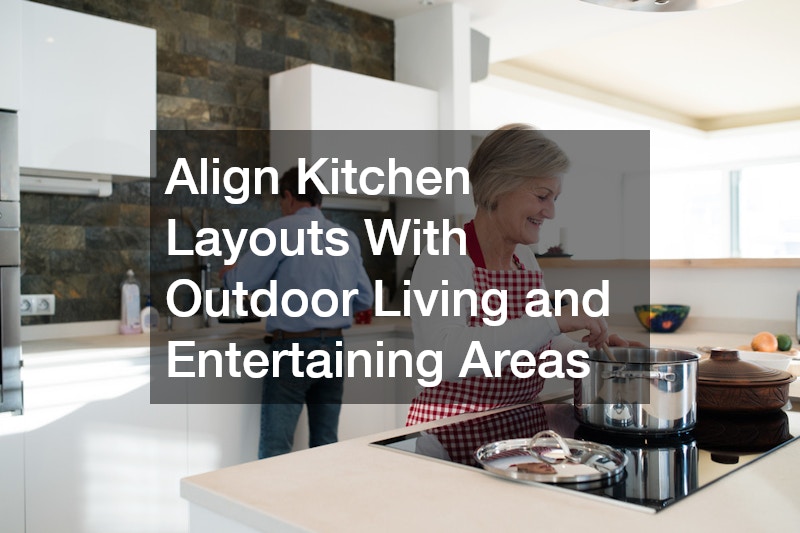
The kitchen often serves as the hub of home activity, making its alignment with outdoor spaces critical for seamless entertaining and everyday living. Strategic planning allows the kitchen to feel connected to patios, decks, and pools without compromising functionality.
- Select quartz countertops for indoor-outdoor harmony:
- Durable and resistant to heat and stains.
- Offers a polished aesthetic that complements both indoor cabinets and outdoor surfaces.
- Partner with a local kitchen cabinet company to customize cabinetry that suits transitional spaces:
- Include storage solutions for outdoor entertaining items.
- Plan layouts to accommodate serving stations or pass-through windows.
- Optimize sightlines and traffic flow:
- Ensure clear access to outdoor dining or seating areas.
- Avoid obstacles between prep zones and entryways.
- Include flexible surfaces:
- Consider multi-purpose islands that double as a serving area for outdoor gatherings.
- Install materials that are easy to clean and maintain across indoor-outdoor boundaries.
Additional kitchen integration strategies:
- Incorporate an outdoor bar or beverage station aligned with kitchen prep zones.
- Design pantry and storage layouts that facilitate quick movement between indoor and outdoor cooking areas.
- Select durable finishes that withstand direct sunlight, moisture, or temperature fluctuations near doors or pass-throughs.
- Use sliding or pocket doors to enhance indoor-outdoor flow while saving space.
- Include task lighting that supports both indoor food prep and visibility toward outdoor entertaining areas.
By thoughtfully aligning kitchen layouts with adjacent outdoor areas, homeowners can host larger gatherings more comfortably while maintaining visual and functional cohesion.
Integrate Appliances for Flexible Indoor-Outdoor Use
Appliances are central to modern kitchens and outdoor living spaces. Integrating them effectively ensures that both areas function harmoniously and can accommodate seasonal or large-scale entertaining.
- Choose major appliances that support indoor-outdoor use:
- Refrigerators with dual zones for drinks or perishables.
- Beverage centers or wine coolers placed strategically near outdoor access points.
- Plan for airflow and ventilation:
- Ensure outdoor openings don’t affect indoor temperature or appliance efficiency.
- Consider range hoods and exhaust systems that can handle both indoor and outdoor cooking.
- Allow for future expansion:
- Leave space for outdoor kitchens or additional cooking stations.
- Pre-wire or pre-plumb areas for eventual appliance additions.
- Consider energy efficiency:
- Select appliances with ENERGY STAR ratings to reduce utility costs.
- Group high-use appliances to minimize energy loss.
Additional appliance integration tips:
- Choose appliances with multi-functional features to reduce clutter in indoor-outdoor spaces.
- Position prep sinks or ice makers near doorways to minimize traffic disruption.
- Consider weather-resistant covers or protection for appliances partially exposed to outdoor conditions.
- Incorporate smart appliances that can be monitored remotely for energy management or maintenance reminders.
- Plan appliance layouts with workflow in mind to minimize steps and improve usability during gatherings.
Effective appliance integration enhances convenience and usability, making transitions between indoor and outdoor entertaining effortless and enjoyable.
Use Hands-On Research to Choose Materials That Work Together

Material selection is one of the most impactful decisions in achieving seamless indoor-outdoor design. Seeing and touching finishes in person allows homeowners to coordinate colors, textures, and durability in a way that online research alone cannot replicate.
- Visit local showrooms to compare options across multiple spaces:
- Evaluate countertops, cabinets, flooring, and hardware together.
- Test finishes under natural light and artificial lighting conditions.
- Ask showroom specialists for compatibility insights:
- Which materials perform well in wet or high-traffic areas?
- How do finishes weather over time when exposed to sunlight or moisture?
- Coordinate palette and texture:
- Harmonize wood tones, stone surfaces, and metals to create a consistent theme.
- Use subtle contrasts to add depth without breaking visual flow.
- Evaluate longevity:
- Select materials that resist staining, fading, or warping.
- Prioritize low-maintenance options for outdoor areas exposed to weather.
Additional material research strategies:
- Bring samples of existing interior materials to the showroom to check for coordination.
- Test finishes outdoors under different weather conditions to see how they respond over time.
- Discuss warranties and service options with local suppliers.
- Compare costs not only for initial purchase but also long-term maintenance.
- Consider acoustic and thermal properties for areas where indoor and outdoor spaces meet.
By investing time in material research at local showrooms, homeowners can make informed decisions that enhance the visual and functional continuity of their indoor-outdoor remodel.
Plan Outdoor Amenities With Long-Term Enjoyment in Mind
Outdoor spaces should be designed for functionality and enjoyment throughout the year. Proper planning ensures pools, patios, and landscaping complement the home while remaining low-maintenance and safe.
- Position pools strategically to align with interior sightlines and entertainment zones.
- Design access paths and walkways:
- Avoid water and debris from intruding into indoor areas.
- Include non-slip surfaces to prevent accidents.
- Engage a pool service company early in the planning process:
- Ensure pool equipment placement allows for future maintenance.
- Discuss layout options that make cleaning and repairs straightforward.
- Consider safety and code requirements:
- Fencing, gates, and lighting must meet local regulations.
- Plan for proper circulation and visibility around pools.
- Incorporate flexible seating and entertainment areas:
- Modular furniture or adjustable layouts allow for seasonal adaptability.
- Shade structures or pergolas extend usability during hot weather.
Additional planning tips:
- Incorporate landscaping that creates privacy while maintaining open sightlines from key indoor areas.
- Plan outdoor lighting for both safety and ambiance.
- Use durable, weather-resistant materials for all furniture and accessories.
- Consider built-in storage to keep outdoor essentials organized.
- Factor in drainage and grading to prevent water accumulation near structures.
Proper outdoor planning ensures that amenities complement indoor spaces while providing long-term enjoyment and peace of mind.
Build Maintenance Planning Into the Remodeling Process
Maintenance considerations are often overlooked during remodeling, leading to frustrations after project completion. Designing with upkeep in mind helps preserve both beauty and functionality.
- Coordinate with pool cleaning service providers:
- Ensure equipment and access points are easy to reach.
- Plan for routine chemical balancing, filtration, and seasonal cleaning.
- Include provisions for local pool repair:
- Avoid designs that block access to pumps, heaters, or other essential components.
- Schedule inspections or service windows without disrupting indoor activities.
- Select low-maintenance finishes:
- Composite decking, durable countertop materials, and weather-resistant cabinetry reduce long-term upkeep.
- Choose finishes that withstand outdoor conditions without frequent refinishing.
- Plan landscaping and drainage:
- Prevent water runoff from affecting deck surfaces or interior floors.
- Use planting strategies to minimize leaf and debris accumulation near pools or decks.
Additional maintenance-focused strategies:
- Incorporate storage for cleaning equipment to keep it accessible but out of sight.
- Schedule periodic professional inspections for pools, decks, and appliances.
- Choose finishes and materials that resist mold, mildew, and UV damage.
- Simplify irrigation and lighting systems for easier management.
- Train household members on proper upkeep routines to maintain beauty and safety.
Integrating maintenance planning during the design phase saves time, money, and stress while protecting your investment for years to come.
Coordinate Timelines, Permits, and Trades for Fewer Delays
Even the best designs can be derailed by poor coordination. Ensuring that indoor and outdoor projects progress smoothly requires careful planning, communication, and management.
- Sequence projects to minimize disruptions:
- Consider completing structural work before finishes or landscaping.
- Align kitchen, deck, and pool work to avoid conflicts between trades.
- Collaborate closely with home remodeling companies:
- Experienced companies can manage timelines, subcontractors, and inspections.
- They can anticipate scheduling conflicts and adjust plans proactively.
- Understand local permitting requirements:
- Pools, decks, and major remodeling often require permits.
- Early submission prevents project delays.
- Track progress regularly:
- Maintain a timeline checklist.
- Conduct site walkthroughs to ensure adherence to specifications.
- Plan for contingencies:
- Weather, supply chain delays, and unexpected structural issues can impact timelines.
- Build flexibility into your schedule to avoid rushed decisions.
Additional coordination strategies:
- Maintain detailed communication logs with contractors.
- Use project management apps to track multiple trades and deadlines.
- Schedule inspections strategically to reduce downtime.
- Anticipate material lead times for both indoor and outdoor elements.
- Set milestone goals to ensure the project remains on track.
Coordinating timelines and trades carefully ensures a smooth, efficient remodeling process that brings indoor and outdoor spaces together seamlessly.
Seamless indoor-outdoor remodeling is about more than aesthetics—it’s about functionality, comfort, and long-term enjoyment. By planning with a unified vision, coordinating materials, appliances, and amenities, and considering maintenance and workflow, homeowners can create spaces that feel connected, natural, and intentional.
A cohesive approach ensures that every upgrade—from kitchen countertops to decks and pools—works in harmony. Proper sequencing, material selection, and maintenance planning protect your investment and simplify everyday life. Well-executed designs allow you to entertain with ease, enjoy family time in comfort, and create a home that adapts to your lifestyle over time.
Thoughtful remodeling transforms ordinary projects into spaces that are beautiful, functional, and enduring. By anticipating challenges, consulting experts, and making deliberate choices, homeowners can achieve a home that not only looks impressive but also supports the way they live. Ultimately, a well-integrated indoor-outdoor remodel enhances daily life, maximizes home value, and creates an environment that truly feels like an upgraded nest.